The TrueVolt PureRail C33 Nano transforms dirty
USB power into laboratory-grade clean power. Raw
USB from any phone charger carries 4 to 5mV of
ripple noise. For precision ADC circuits, SDR
receivers, RF front-ends and audio DACs, this
noise corrupts measurements and degrades
performance. The C33 Nano reduces this noise
by 45 times — verified on oscilloscope.
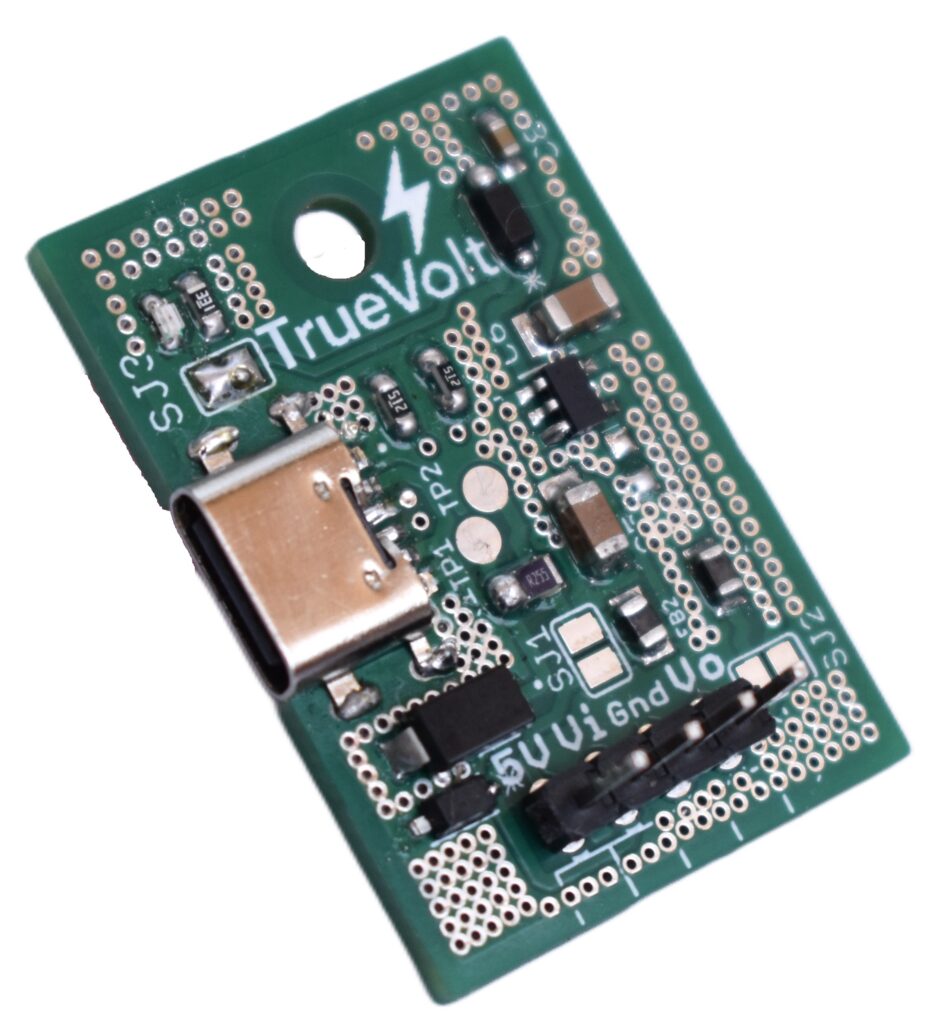
The Solution — 7µVrms Clean Power from Any USB-C Charger
Built around the genuine Texas Instruments TPS7A2033 ultra-low noise LDO, combined with Abracon ferrite bead EMI filtering, Samsung MLCC capacitors and an authentic Amphenol USB-C connector rated for 10000 plus mating cycles. The result is a 3.3V output with only 7µVrms noise and 95dB PSRR at 1kHz — virtually undetectable by standard oscilloscopes.
Measured Performance — Real Oscilloscope Data
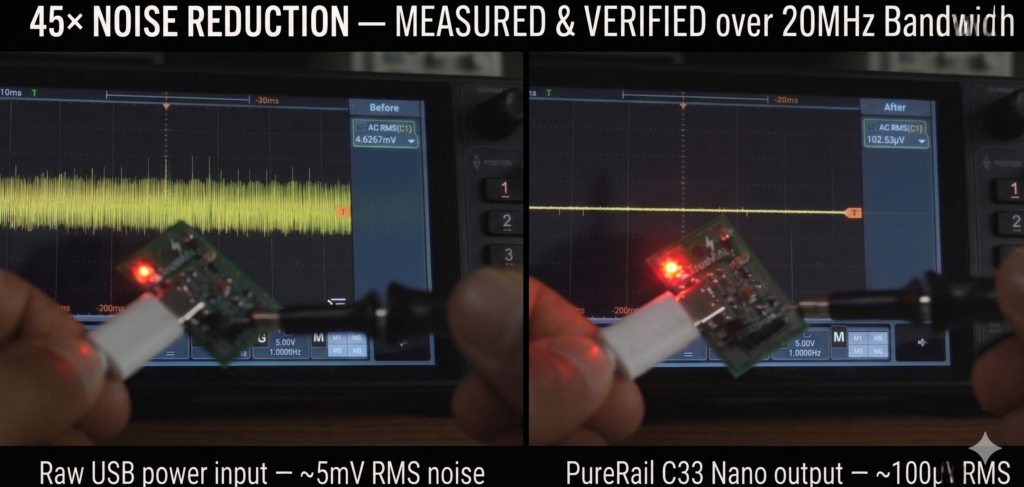
Raw USB input noise measured at approximately 4.6mV RMS across 20MHz bandwidth. PureRail C33 Nano output measured at approximately 100µV RMS. A verified 45 times noise reduction. Measured on a real oscilloscope under real load conditions. We publish the data because we stand behind every specification we claim.
Use Any USB-C Source — No Special Power Supply Needed
The PureRail C33 Nano works with any standard USB-C power source you already own:
Phone charger — the one on your desk right now
Power bank — for portable field use
Laptop USB-C port — for bench work
USB hub — for multi-device setups
Any USB-C PD charger — 5V negotiated automatically
The integrated 5.1kΩ CC resistors tell any modern USB-C PD charger to deliver a stable 5V rail instantly. No configuration needed. No special adapters. No proprietary power supplies. Just plug in and get laboratory-grade clean power from the charger already in your pocket.
This means your entire precision electronics setup — SDR receiver, ADC circuit, RF front-end or audio DAC — can run from a single phone charger anywhere in the world. On your bench, in the field, at a hackathon, in a remote monitoring installation.
Replace Your Bench Power Supply
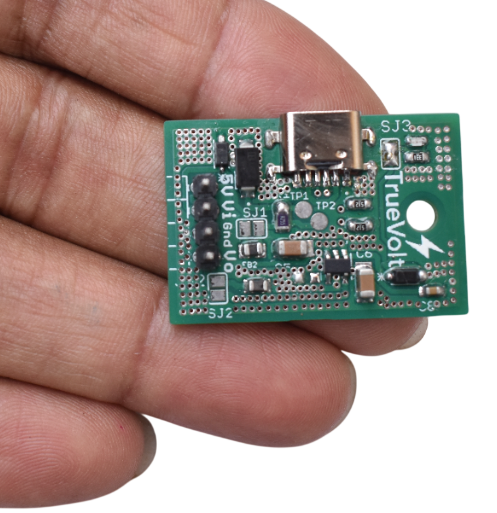
Key Specifications
Who Is This For
RTL-SDR and HackRF users wanting cleaner reception. Precision ADC circuit designers needing stable reference power. Audio DAC and HiFi preamplifier builders requiring silent power rails. ESP32 and Arduino projects needing clean 3.3V from USB.Battery powered instruments needing ultra-low quiescent current. RF front-end designers needing low phase noise supply.
Genuine Components — No Compromises
Texas Instruments TPS7A2033 — sourced from Mouser authorized distributor. Amphenol USB-C connector rated 10000 plus mating cycles. Samsung 1206 X5R MLCC capacitors 25V rated. Abracon ferrite bead 150 Ohm at 100MHz. Panasonic precision 0.039 Ohm shunt resistor. No grey market components. No remarked chips. Every part traceable to authorized distributor.
How to Use
Step 1 — Connect any USB-C phone charger to the USB-C input port.
Step 2 — Power-on LED illuminates confirming 5V input is present.
Step 3 — Connect your circuit to output header pins. Use 3.3V for precision sensors and ADC. Use 5V filtered for digital logic.
Step 4 — For current measurement connect multimeter in millivolt mode across TP1 and TP2. Divide reading by 0.255 to get current in Amperes.
Warning — Use either USB-C OR external Vin. Never connect both simultaneously.