TrueVolt74033 · Everyday 3.3 V power · AMS1117 upgrade
The 3.3 V module the AMS1117 should have been.
Generic AMS1117 boards reset your MCU when USB sags, die on the first short and run hot on an unknown chip. TrueVolt74033 uses a genuine TI TLV740P on an aluminium PCB, with protection the clones skip. Same three pins. Drop it in.
Genuine TI. Generic-board price.
Fixes the problems generic 3.3 V boards cause
If the regulator is the cheapest part on your board, it’s usually the one causing trouble.
🔁 Random resets when something switches on
Relay, servo or motor sags USB 5 V; the AMS1117 drops out and the MCU browns out
Fixed: 0.46 V dropout rides through the sag
⚡ One slip of the probe and it’s dead
Accidental short on the 3.3 V rail while prototyping
Fixed: foldback drops a short to about 40 mA, thermal shutdown backs it up
🔥 Regulator too hot to touch
A small regulator on thin FR4 at a few hundred mA
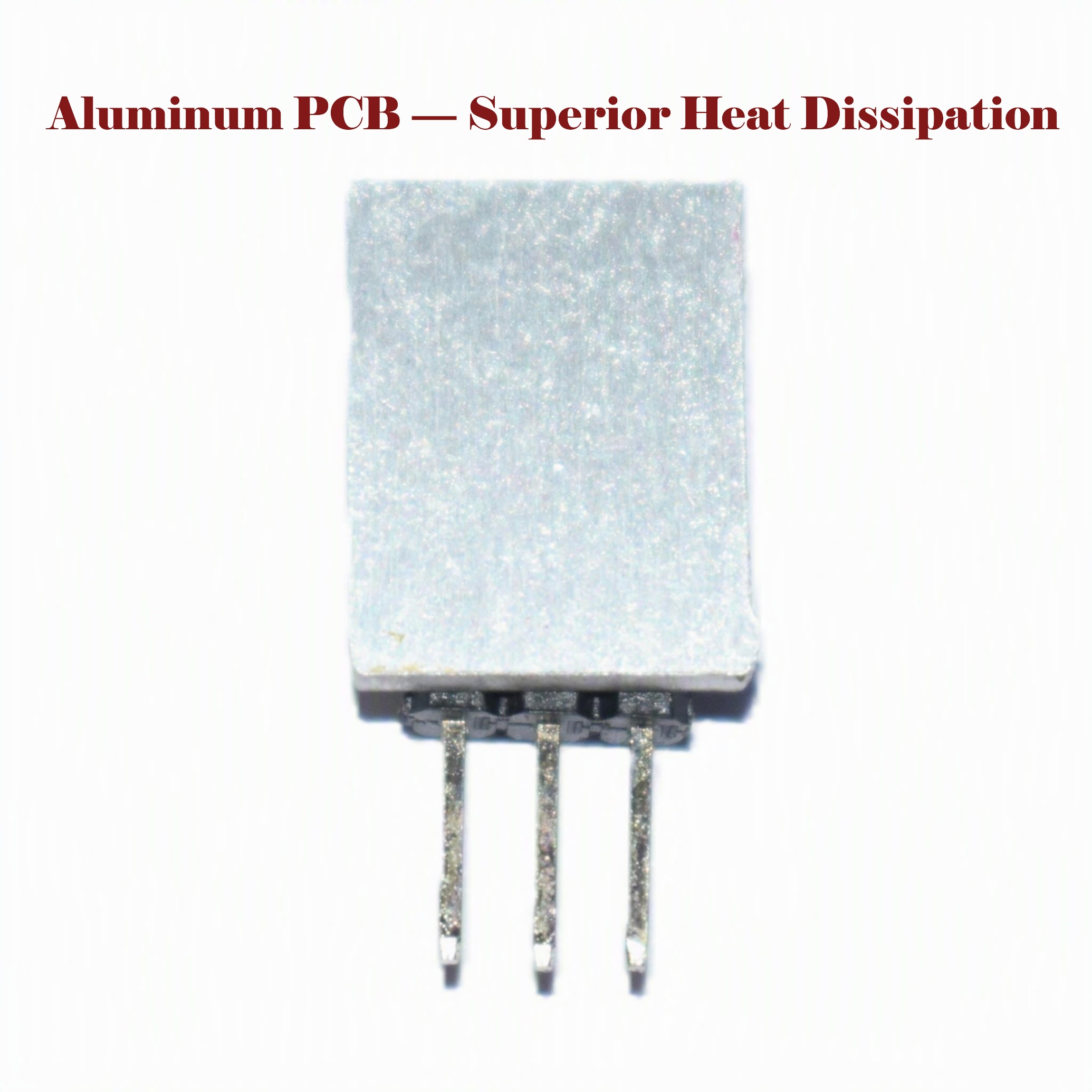
Fixed: aluminium PCB spreads the heat. Watch the test
❓ Specs that don’t match the datasheet
Relabelled or reject chips on generic boards
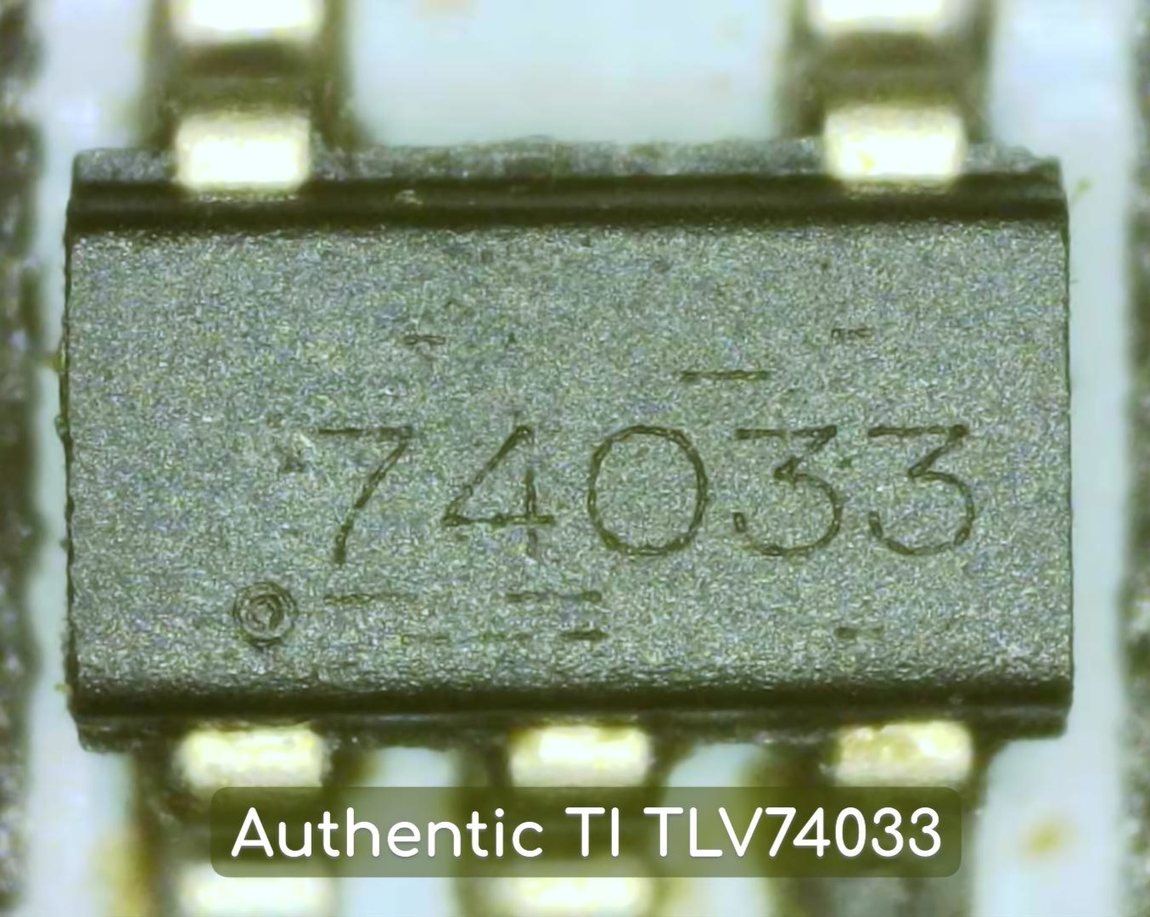
Fixed: genuine Texas Instruments silicon, every spec real
🔌 Damaged after hot-plugging
Output held higher than input during plug-in or power-down
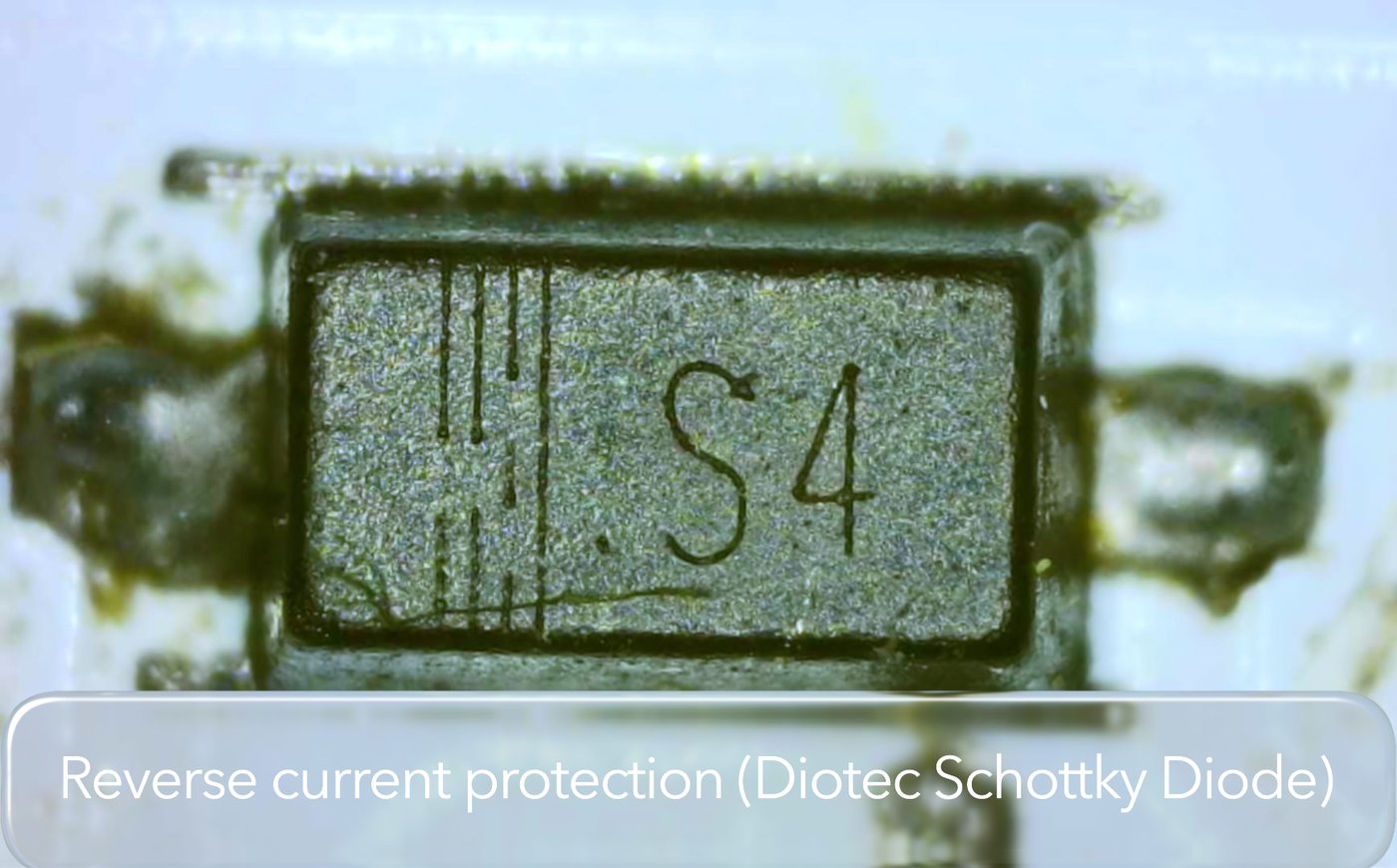
Fixed: Schottky diode blocks back-feed through the regulator
🪫 Can’t make 3.3 V from a Li-ion cell
AMS1117 needs about 4.4 V in; it idles at about 5 mA too
Fixed: runs from one cell, idles at 50 µA
Same price bracket. Different class of parts.
What you actually get for the price of a generic board.
A 2020 TI regulator, not a 1990s clone.
Modern CMOS: lower dropout, 100× lower idle current, ±1% accuracy, UVLO and soft start built in.
Survives prototyping mistakes.
Shorts, hot-plugs and overloads are handled by foldback, thermal shutdown and a back-feed diode.
Cheaper than an evening of debugging.
Stop chasing “firmware bugs” that are really a regulator dropping out.
Connect it in a minute
USB 5 V or a Li-ion cell
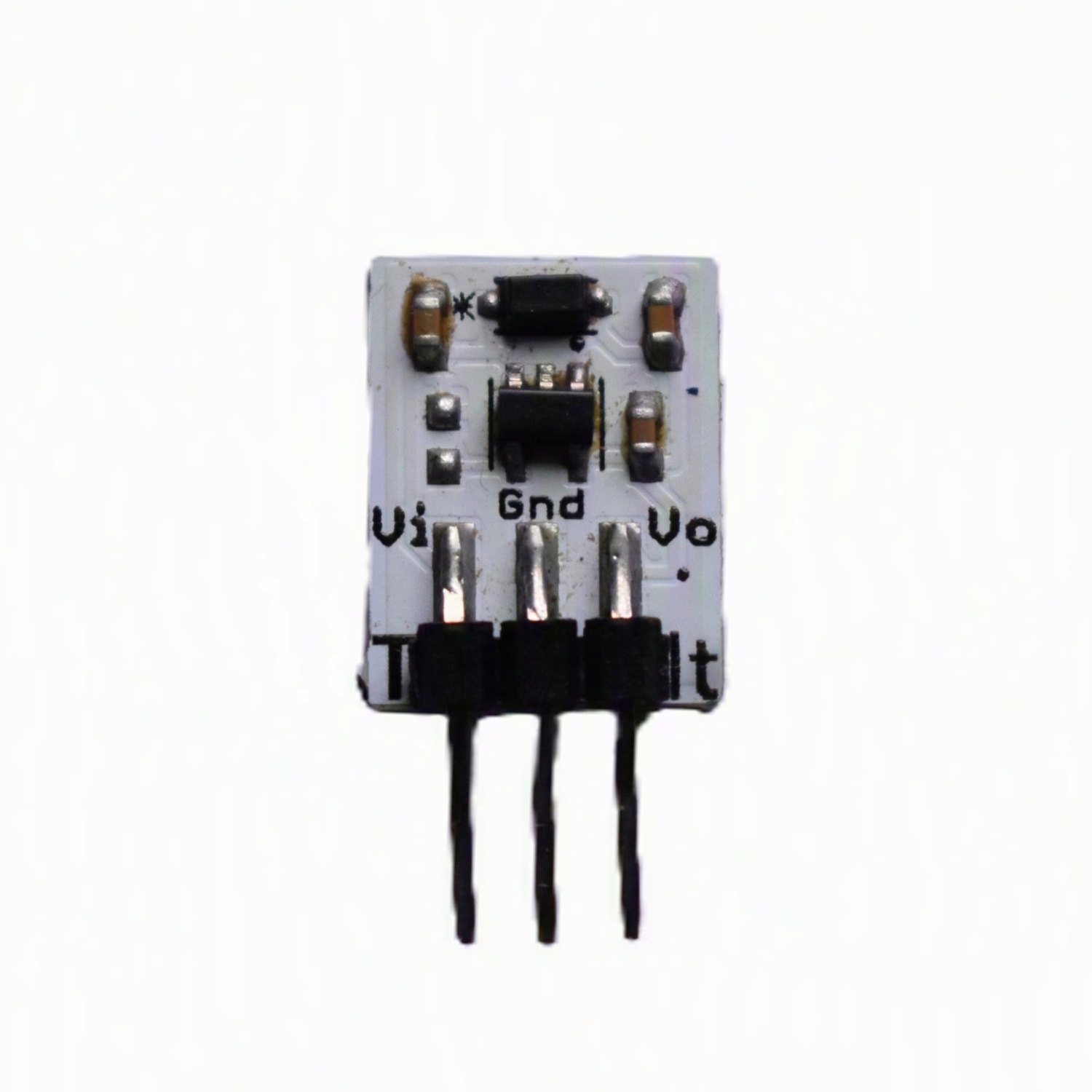
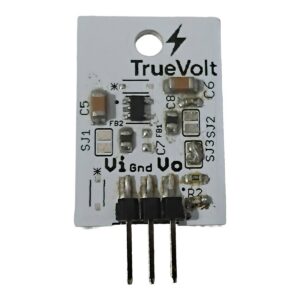
Same VIN–GND–VOUT order as a 7805, on 2.54 mm pins: fits breadboards, perfboard and existing 78xx-style footprints. No code, no extra parts.
Why the aluminium board matters
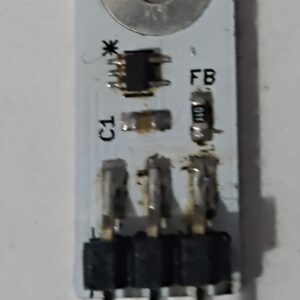
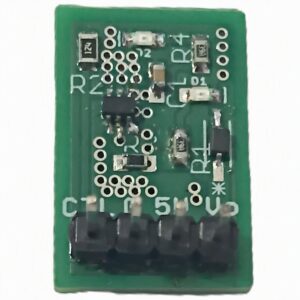
Same TLV740P, same 5 V in, same 300 mA load. The FR4 board (green) hot-spots within about 11 seconds; the aluminium board stays cooler and spreads the heat.
Already have an AMS1117 board?
Here’s what changes when you swap it.
| What matters | Generic AMS1117-3.3 board | TrueVolt74033 |
|---|---|---|
| Dropout | ≈1.1 V: drops out when USB sags | 460 mV at 300 mA, less at lighter loads |
| Into a short circuit | Keeps pushing high current; the chip cooks | Folds back to ≈40 mA, plus thermal shutdown |
| Back-feed protection | Usually none | Diotec SD103AW Schottky diode |
| Board | FR4 | Aluminium MCPCB |
| Parts source | Unknown | Genuine TI, authorised distribution |
| Idle (quiescent) current | ≈5 mA (up to 10 mA) | 50 µA typical |
| Max current | Up to 1 A | 300 mA |
| Max input | Up to 15 V | 5.5 V |
Typical values from the AMS1117 and TI TLV740P datasheets. The AMS1117 wins the last two rows; if you need more than 300 mA or more than 5.5 V in, this isn’t your module. Full AMS1117 vs TLV740P comparison →
What’s on the board, and why
Samsung 4.7 µF ceramics
Branded input and output capacitors for a stable rail and fast load response. No unmarked caps.
Short-circuit safe
Brick-wall limit at about 360 mA, folding back to about 40 mA into a dead short, with thermal shutdown as the last line.
Is it right for your project?
✓ Great fit
3.3 V rails from USB 5 V for Arduino, STM32, nRF52, RP2040 or MSP430
Sensors, OLEDs, SD cards, LoRa, nRF24L01 and Bluetooth modules
Projects with relays, servos or motors that sag the 5 V rail
Replacing any AMS1117 or 78xx-style 3.3 V board under 300 mA
Which Ramanu module do you need?
You are here · Everyday 3.3 V
TrueVolt74033
TI TLV740P. The low-cost AMS1117 upgrade for MCUs, sensors and radios.
Add to cart →Clean power
TrueVolt LN-7A2033
TI TPS7A2033, 7 µVrms. For load cells, ADCs, mics, GPS and audio.
View →Longest battery life
TrueVolt NP-7A0333
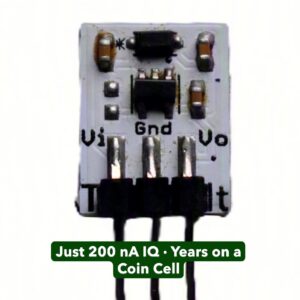
TI TPS7A0333, 200 nA idle, 200 mA. For coin cells, energy harvesting and years of standby.
View →Questions buyers ask
Will it replace my AMS1117 board?
Yes, if your load stays under 300 mA and your input is 5.5 V or less. Pin order is VIN–GND–VOUT on 2.54 mm pins; check it matches your board before plugging in, as some AMS1117 boards use a different order.
Why pay more than for a generic board?
You mostly don’t: it sits in the same price bracket. For that you get a genuine TI chip instead of an unknown one, short-circuit and back-feed protection, and an aluminium PCB. One dead board or one evening chasing resets costs more.
Can I run it from one Li-ion or LiPo cell?
Yes. It holds a full 3.3 V down to about 3.8 V in at 300 mA, and down to about 3.45 V at 100 mA. For projects that sleep for months, the NP-7A0333 stretches battery life much further.
Can it power an ESP32?
Not with Wi-Fi running. Wi-Fi transmit bursts can reach about 500 mA and will trip the 300 mA regulator into brownout. Use it for the sensors and radios around the ESP32, and give the ESP32 its own 1 A supply.
Is it low noise?
It’s clean enough for microcontrollers, digital sensors and radios. For precision analog (load cells, 16–24-bit ADCs, mics, audio DACs) use the LN-7A2033: 7 µVrms against roughly 110 µVrms for the TLV740P.
Is it reverse-polarity protected?
No. The Schottky diode protects the regulator from back-feed (output higher than input), which is the common hot-plug and power-down failure. A supply connected backwards can still damage it, so check VIN and GND first.
Is there an enable pin?
The module breaks out three pins only; the regulator is always on when powered. To switch the rail from a microcontroller, switch VIN.
TLV740P 3.3V LDO module: full technical specifications
| Regulator | Texas Instruments TLV740P (TLV74033PDBVR), SOT-23-5, genuine |
| Output | 3.3 V fixed, ±1%, up to 300 mA |
| Input | 3.8–5.5 V (5 V typical); 6.0 V absolute maximum |
| Dropout | 460 mV typical, 500 mV max at 300 mA |
| Quiescent current | 50 µA typical, 80 µA max |
| PSRR | 67 dB at 100 Hz · 65 dB at 1 kHz · 45 dB at 10 kHz |
| Output noise | ≈110 µVrms (TI typical curve, 3.3 V) |
| Current limit | 360 mA typical; foldback to 40 mA into a short |
| Protection | Foldback current limit · thermal shutdown (158 °C) · UVLO · inrush control · active output discharge · Diotec SD103AW back-feed Schottky |
| Capacitors | Samsung 4.7 µF ceramic, input and output |
| Board | Aluminium metal-core PCB |
| Pinout | 1: VIN · 2: GND · 3: VOUT, 2.54 mm pitch (7805 order) |
| Operating temperature | −40 °C to +85 °C (regulator junction, recommended) |
Proof, not promises
Everything we claim, you can check.
Genuine TI. Generic-board price.
Swap the AMS1117 for the module it should have been. Three pins, one minute.
Add TrueVolt74033 to cart → Buy nowPrefer Amazon? TrueVolt74033 on Amazon India →
Designing with the chip itself?
TLV740P datasheet explained: specs, pinout, thermal limits & AMS1117 comparison →
Reviews
There are no reviews yet.