
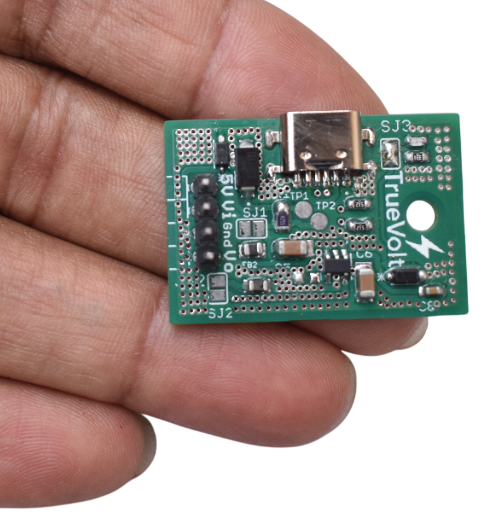
PureRail C33 Nano · USB-C power supply module, 5 V + 3.3 V
One USB-C cable. Clean 5 V for your board, whisper-quiet 3.3 V for your sensors.
A phone charger is fine for a phone. For sensors, ADCs, microphones and radios it is a noise source. Plug any USB-C charger, power bank or laptop port into this module and get a filtered 5 V rail for your Arduino, ESP32 or Raspberry Pi Pico, plus an ultra-low-noise 3.3 V rail for everything that needs quiet power.
The breadboard power supply, done properly.
Fixes the problems makers hit every day
If your project works on batteries but misbehaves on a charger or USB, the supply is the suspect.
📈 ADC readings wander
ESP32 / Arduino analogRead, ADS1115, HX711 load cells, pH and pressure sensors
Fixed: sensors on the quiet 3.3 V rail, steady readings
🎤 Microphone & audio hiss
MAX4466, MAX9814 mic modules, PCM5102 DACs, small audio amps
Fixed: silent background, no whine from the charger
📡 Radio drops, GPS won’t fix
NRF24L01 (incl. PA+LNA), NEO-6M GPS, LoRa modules
Fixed: quiet, stiff 3.3 V with current to spare
🔌 Need 5 V and 3.3 V on a breadboard
Mixed 5 V and 3.3 V parts, one supply, no bench PSU
Fixed: both rails from one USB-C cable
🚫 Type-C board won’t power up
Cheap boards skip the CC resistors, so C-to-C chargers give 0 V
Fixed: 5.1 kΩ CC pull-downs fitted, works with any USB-C charger
💥 Wobbly or dead micro-USB connector
Breadboard power boards that lose contact or tear off the PCB
Fixed: Amphenol USB-C, screw-mounted, 10,000+ cycles
Connect it in a minute
What noise is really costing you
Cheaper than one failed demo.
A drifting sensor or a dropping radio on submission day costs far more than this module.
Cheaper than a bench power supply.
Two clean rails from the charger already on your desk. Take it to the lab, the field or the classroom.
Cheaper than an evening of debugging.
Stop writing averaging filters in code for noise that comes from the supply.
Already have an MB102 or AMS1117 breadboard power module?
Those boards are fine for blinking LEDs. They were never designed for clean power or for USB-C.
| What matters | Typical AMS1117 breadboard module | PureRail C33 Nano |
|---|---|---|
| Input | Barrel jack or micro-USB / USB-A | USB-C (works with C-to-C) or Li-Po header |
| 3.3 V noise | ≈100 µV (AMS1117, 10 Hz–10 kHz) | 7 µVrms over a wider 10 Hz–100 kHz band |
| Ripple rejection | ≈75 dB at 120 Hz | 95 dB at 1 kHz, plus ferrite filters for MHz noise |
| Dropout | ≈1.1 V: a sagging USB rail drags 3.3 V down | 145 mV at 300 mA: holds 3.3 V even from a Li-Po |
| Standby current | ≈5 mA per regulator | 6.5 µA (LED off): good for batteries |
| Protection | Usually a single diode, or none | SMAJ5.0CA TVS + SD103 Schottky |
| Current check | None | Built-in sense resistor: read current with a multimeter |
| Parts source | Unknown | Genuine TI, Amphenol, Samsung, Panasonic, Abracon |
Typical values from the AMS1117 and Texas Instruments TPS7A20 datasheets.
What’s on the board, and why
Genuine TI TPS7A2033
Ultra-low-noise 3.3 V LDO, bought through authorised distribution. No relabelled or clone chips.
Amphenol USB-C, screw-mounted
Gold-plated contacts rated for 10,000+ plug cycles. The M3 hole is grounded, so you can bolt it to a chassis or enclosure.
TVS + Schottky protection
SMAJ5.0CA absorbs ESD and hot-plug spikes on VBUS; SD103 Schottky blocks reverse current.
Ferrite EMI filters on both rails
Abracon AFBC-Q0805 beads (150 Ω at 100 MHz) catch the high-frequency charger hash an LDO alone can’t reject.
Built-in current sense
Panasonic 0.255 Ω shunt. Put a multimeter on TP1–TP2 in mV: current (A) = reading (V) ÷ 0.255.
Samsung 1206 capacitors
Keep about 8.7 µF of real capacitance at 5 V, where a cheap 0603 drops near 2 µF. Why it matters →
Set it up for your circuit
| Jumper | What it does | When to use it |
|---|---|---|
| SJ1 | Bypasses the 5 V ferrite bead | Maximum current and lowest drop on the 5 V rail |
| SJ2 | Bypasses the 3.3 V ferrite bead | Best DC accuracy on 3.3 V, no ferrite IR drop |
| SJ3 | Disconnects the power LED | Battery mode: standby drops to 6.5 µA |
| TP1–TP2 | Shorts the 0.255 Ω sense resistor | Every millivolt counts and you don’t need current readings |
Fix guides: is this your problem?
Step-by-step troubleshooting with a 2-minute test, wiring diagrams and FAQs.
Which Ramanu module do you need?
Already have 5 V in your circuit
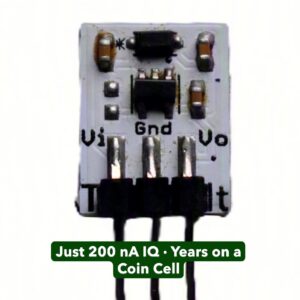
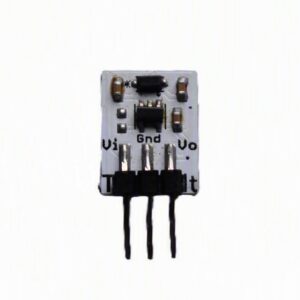
TrueVolt LN-7A2033
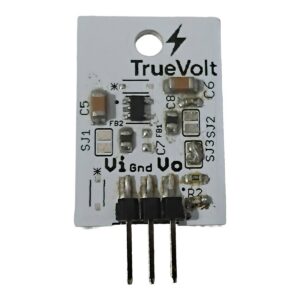
Same quiet 3.3 V regulator as a tiny 3-pin module. Drop it in front of one sensitive part.
View →You are here · Power straight from USB-C
PureRail C33 Nano
Filtered 5 V plus quiet 3.3 V from any USB-C charger. The whole project from one cable.
Add to cart →General 3.3 V power
TrueVolt74033
TI TLV740P. For powering microcontrollers and everyday IoT boards on a budget.
View →Questions buyers ask
Will it work with my USB-C phone charger and a C-to-C cable?
Yes. The 5.1 kΩ CC pull-down resistors tell any USB-C charger to supply 5 V, including C-to-C cables and USB-PD chargers. It also works with A-to-C cables, power banks and laptop ports. The module always takes 5 V; it does not request 9 V or 12 V.
Can I power an ESP32 or Arduino with it?
Yes, from the 5 V rail (up to 1 A) into the board’s 5 V or VIN pin. The 3.3 V rail is rated 300 mA and is meant for sensors, ADCs, mics and radios, not for ESP32 Wi-Fi bursts of about 500 mA.
How much current can I draw?
1 A total: up to 1 A on 5 V, of which up to 300 mA can be on 3.3 V. Your charger must be able to supply it.
Is the 5 V output regulated?
It is the USB 5 V, protected and filtered through a ferrite bead, so it follows your charger’s voltage. The 3.3 V output is regulated by the TI TPS7A2033 LDO.
Does the USB-C port carry data?
No. It is a power-only USB-C input. Program your board through its own USB port.
Can I run it from a Li-Po battery?
Yes, through the 2.54 mm header. With 145 mV dropout the 3.3 V rail stays regulated down to about 3.45 V battery voltage. Open SJ3 to switch off the LED and drop standby current to 6.5 µA. Never connect USB-C and the battery at the same time.
Is the 7 µVrms noise measured on every board?
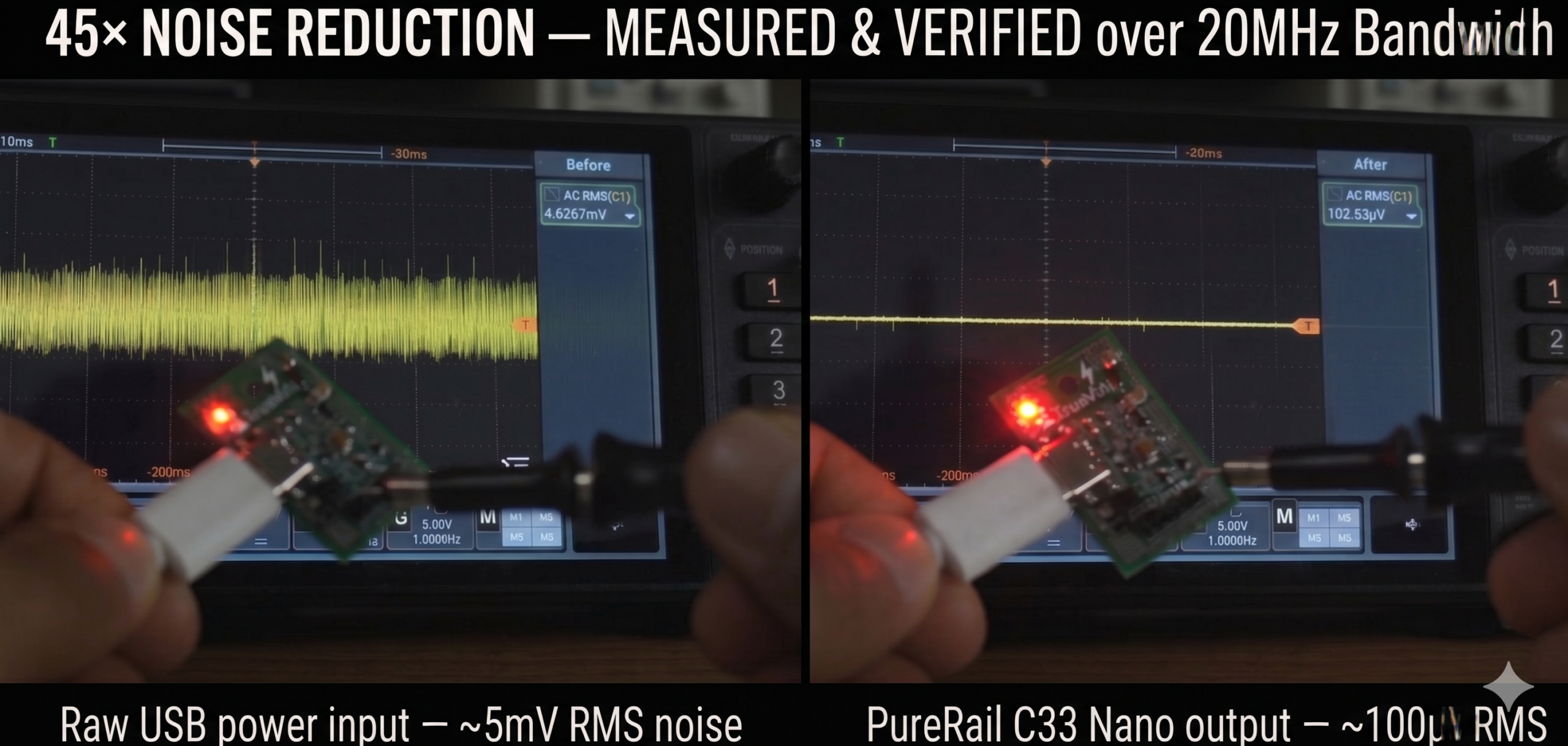
7 µVrms is the TPS7A2033 datasheet figure for the regulator. The noise you see on the 3.3 V rail also depends on your input source and wiring. Watch our oscilloscope measurement →
Full technical specifications
| 3.3 V regulator | Texas Instruments TPS7A2033 (genuine, authorised distribution) |
| Outputs | 5.0 V filtered (1 A max) + 3.3 V regulated (300 mA max); 1 A total |
| 3.3 V noise | 7 µVrms, 10 Hz–100 kHz (regulator; actual depends on input source) |
| PSRR | 95 dB at 1 kHz |
| Dropout | 145 mV at 300 mA |
| Quiescent current | 6.5 µA (LED disabled via SJ3) |
| Inputs | USB Type-C or 2.54 mm header (one at a time, never both); Li-Po down to 3.45 V |
| USB-C connector | Amphenol, power-only, gold-plated, 10,000+ mating cycles, M3 screw mount |
| USB-C logic | 5.1 kΩ CC pull-down resistors (5 V from any USB-C source) |
| EMI filter | Abracon AFBC-Q0805, 150 Ω at 100 MHz, on both rails |
| Current sense | Panasonic 0.255 Ω shunt, test points TP1–TP2 |
| Protection | SMAJ5.0CA bidirectional TVS on VBUS · SD103 Schottky reverse-current protection |
| Capacitors | Samsung CL31A106KAHNNNE, 10 µF X5R 25 V 1206 |
| Configuration | SJ1 5 V ferrite bypass · SJ2 3.3 V ferrite bypass · SJ3 LED disable · TP1–TP2 sense bypass |
| Mounting | M3 screw hole, grounded, for chassis bonding |
Module datasheet (PDF) · TI TPS7A20 datasheet · USB-C power explained
Proof, not promises
Everything we claim, you can check.
The breadboard power supply, done properly.
One USB-C cable. Clean 5 V and whisper-quiet 3.3 V. Designed and made in Pune, India.
Add PureRail C33 Nano to cart → Buy nowDesigning with the chip itself?
TPS7A20 datasheet explained: specs, pinout & application circuit →
Reviews
There are no reviews yet.